From a validated idea to a shipped product, and the versions after it
For founders and product teams who need a first version that can take money in weeks, built by senior engineers who stay to ship the next ones. We shape the scope with you, price it in writing, and deliver working software every week.
Talk to us if
- You have a validated idea and a deadline, and no team to build it.
- A prototype proved the idea and now it has to survive real users, real money and real load.
- Your roadmap is stalled behind a hiring plan that has not closed.
- You are replacing spreadsheets, WhatsApp groups and manual invoicing with one system.
- Something in production breaks every week and nobody owns it.
Who this is for
- A founder with a validated idea and a date to hit
- A product team that needs senior capacity without a long hiring cycle
- A business whose operations have outgrown spreadsheets and manual billing
- A company that inherited a codebase nobody on staff wrote
What we build
Discovery and shaping
A week that ends in a written plan, a price and a decision you can say no to, rather than an open-ended retainer.
- Goals, constraints and the riskiest assumption, written down
- A scope shaped to a fixed price, with what is deliberately excluded
- Architecture and data model sketched before any code is committed
- A build order that puts the risky part first, not last
Web and mobile applications
The product itself: interfaces people use every day, on a stack chosen for how long you will have to maintain it.
- Server-rendered web applications in Next.js and React, typed end to end
- Cross-platform mobile with React Native, shipped to both stores
- Design systems and component libraries, so the tenth screen costs less than the first
- Accessibility to WCAG 2.2 AA, verified with axe and a keyboard, not assumed
APIs, integrations and back office
The parts nobody demos and everybody depends on.
- REST and GraphQL APIs with versioning, pagination and rate limits
- Third-party integrations with retries, idempotency and a replay path
- Webhook receivers that verify signatures and survive a missed delivery
- Admin and operations screens for the people who run the business
Payments, billing and subscriptions
Taking money is a product surface, not a plugin. We build the whole path, including the month-end.
- Checkout on your own gateway account, so funds and records stay yours
- Subscriptions, trials, upgrades, proration and dunning
- Refunds, disputes, receipts and a purchase history a customer can read
- Nightly reconciliation against the gateway, with an operator queue for exceptions
- Invoice data and exports your accountant asks for
Multi-tenancy, accounts and access control
If more than one organisation uses your product, isolation has to be structural rather than remembered.
- Tenant isolation carried by every shared medium: cache keys, queues, rooms, storage paths
- Roles and permissions, invitations, and delegated administration
- Single sign-on, session policy and audit logs
- Per-tenant branding, custom domains and configuration
Quality and handover
What makes the second year cheaper than the first.
- Automated tests at the levels that pay: unit, contract and end-to-end on the money paths
- Continuous integration that blocks a broken merge
- A written runbook, an architecture note and a recorded walkthrough
- Your repository, your cloud accounts, your secrets, from the first commit
What you get
- A written scope and a fixed price after a one-week discovery
- A production system with authentication, billing, admin and monitoring
- Weekly demos and a changelog you can forward to stakeholders
- Tests, CI and a runbook handed over with the code
- Ongoing operations if you want them, or a clean handover if you do not
What you gain
- A first version in production in weeks, not quarters
- A price agreed in writing before the build, not discovered during it
- Code, accounts and secrets that are yours from day one
- A system your own engineers can pick up, because the runbook exists
How the engagement runs
Discovery week
We agree the goal, the constraints and the riskiest assumption, and write them down.
Shaping sprint
One to two weeks that end with a scope, an architecture and a fixed price.
Build in weekly slices
One accountable owner, a demo every week, software you can use.
Run and improve
Monitoring, on-call and the next versions, or a documented handover to your team.
Technology we work with
- Languages and frameworks
- TypeScript
- Node.js
- NestJS
- Next.js
- React
- React Native
- Python
- Data
- PostgreSQL
- Prisma
- Redis
- BullMQ
- S3-compatible object storage
- Payments
- Razorpay
- Stripe
- Cashfree
- PayU
- Delivery
- GitHub Actions
- Docker
- Fly.io
- Vercel
- Cloudflare
- Quality
- Vitest
- Playwright
- axe-core
- Lighthouse CI
- OpenTelemetry
Related work
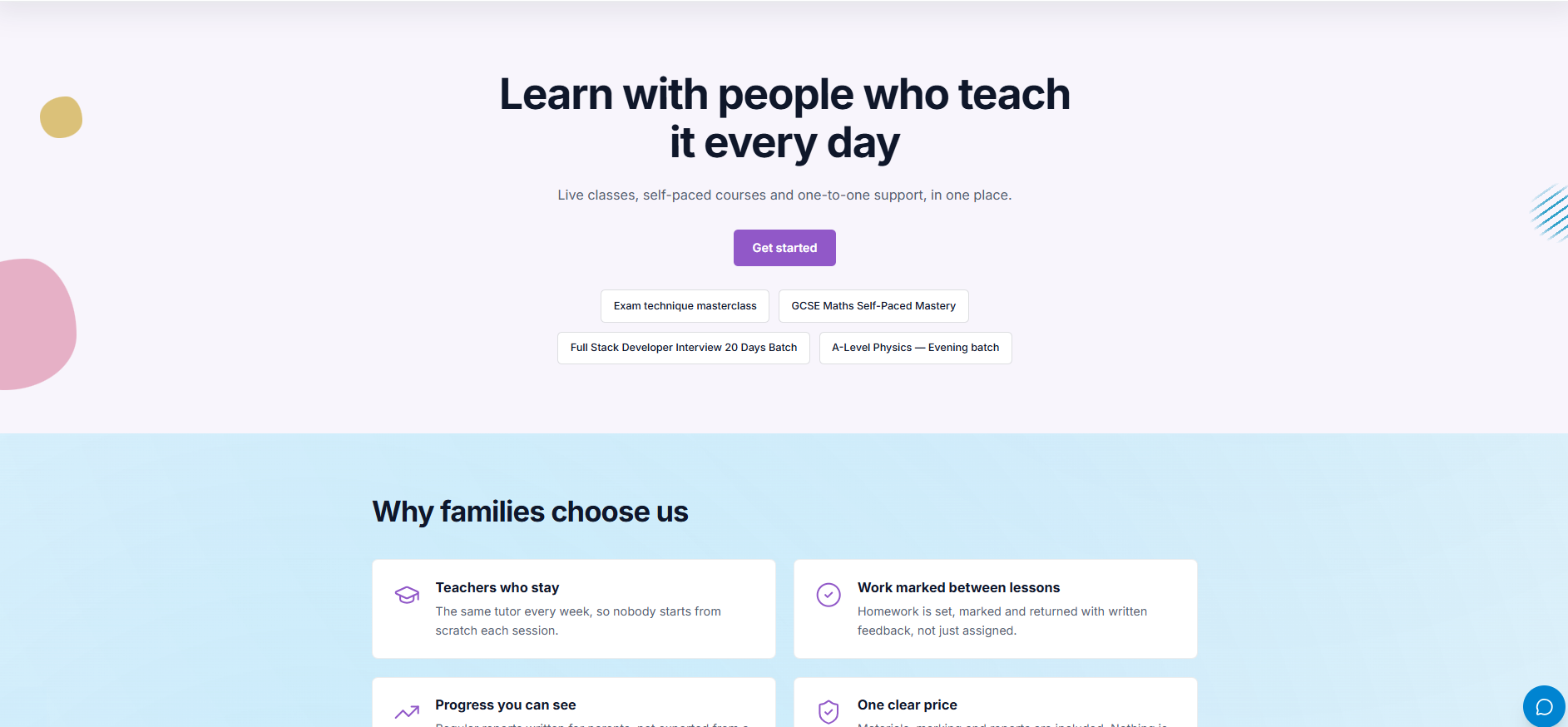
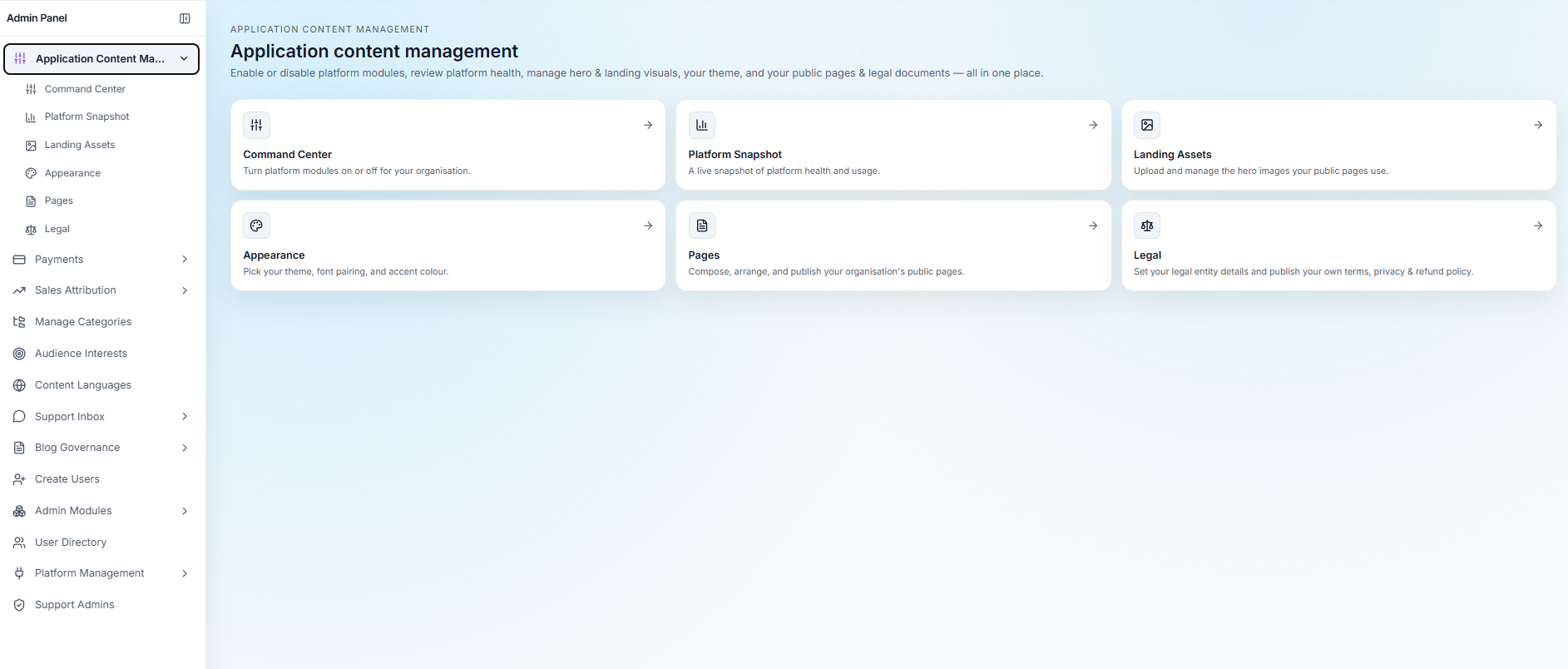
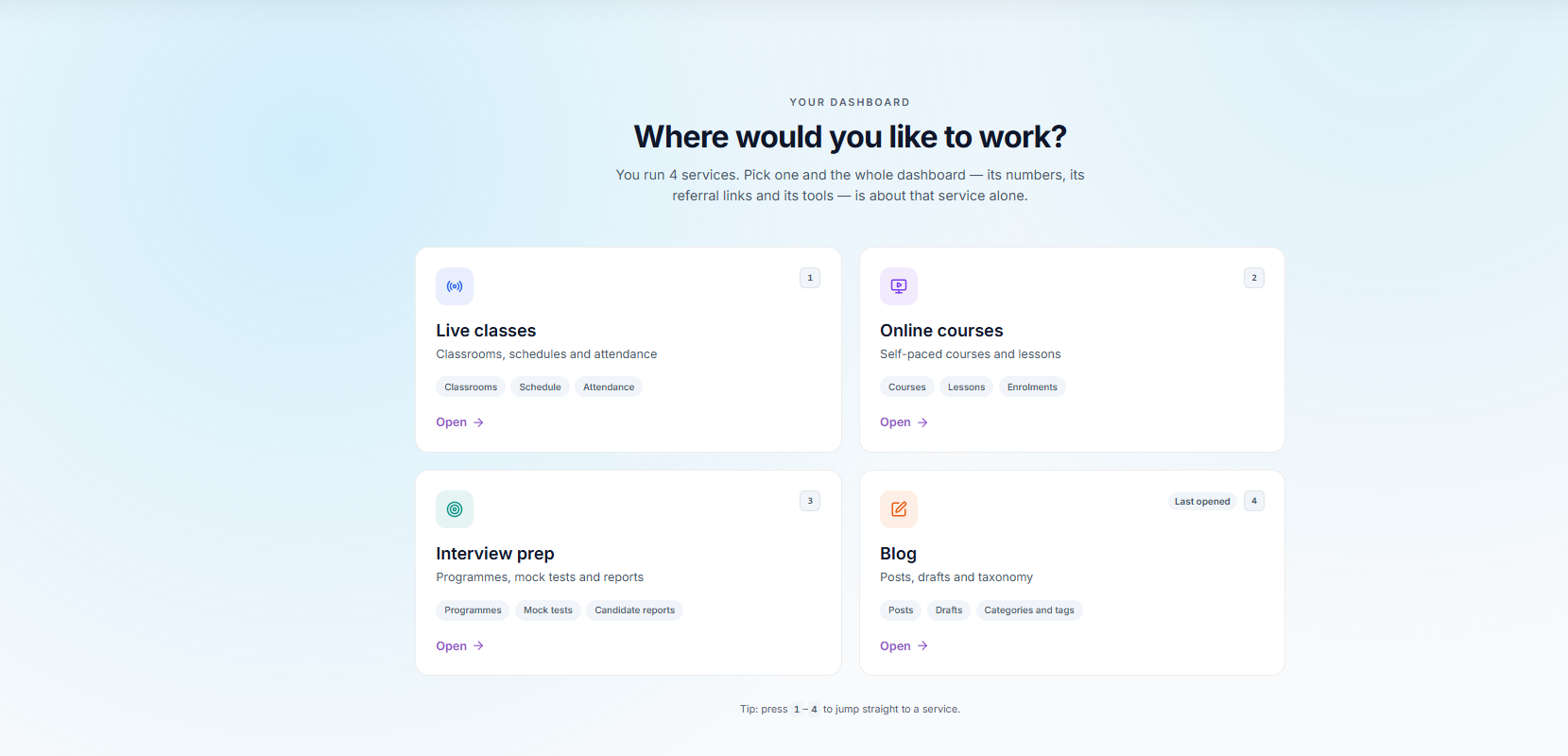
Building Jversity: a multi-tenant educational LMS platform
Live classes, courses, interview preparation, blogs, video recordings and much more built and operated by us as our own product.
Questions we get asked
How long does a first version take?
Most first versions ship six to ten weeks after the shaping sprint. The sprint itself takes one to two weeks and ends with a written scope and a fixed price.
Do you work alongside an existing team?
Yes. We take ownership of a defined slice, demo weekly to your team, and write decisions down so nothing important lives only in a call.
Who owns the code?
You do, from the first commit. The repository is yours and every deployment secret sits in your own accounts.
How do you price an engagement?
A fixed price for the shaped scope, then a monthly retainer for operations and further versions. No open-ended hourly billing.
Can you take over a codebase somebody else wrote?
Yes. We start with a short audit that reports what is safe, what is risky and what it would cost to stabilise, before anyone commits to a rewrite.
What does success look like for your project?
Tell us what you are building and where it is stuck. We reply within one business day with a straight answer on fit, approach and cost.